


Introducing ReStalk™ Biobased Gloves!
Watson Gloves is proud to bring to the world our collection of ReStalk™ biobased gloves.
From Corn to Gloves
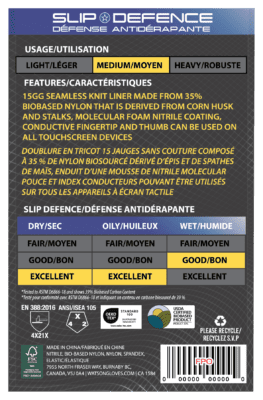
Introducing the very first biobased nylon gloves, 333 Stealth Colonel and 344 Lemon Drop. Designed with biobased nylon and molecular nitrile coating that reduces water consumption by 80% during the manufacturing process versus regular nitrile.
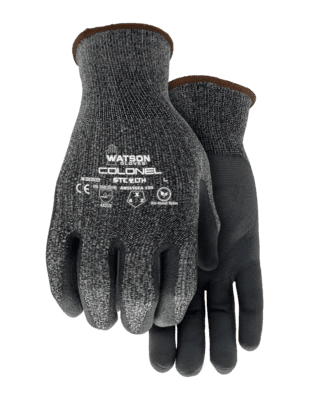
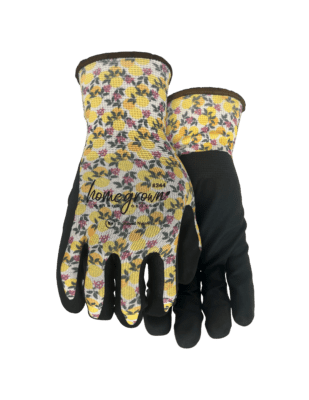
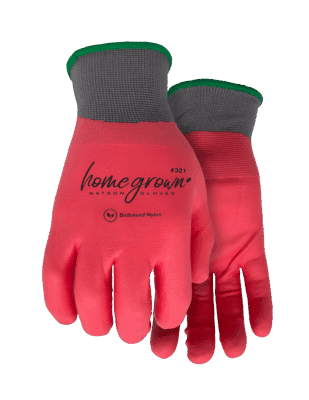
All biobased seamless knit gloves are tested to the ASTM D6866 standard – The gloves show up to 16% bio carbon content by weight.
What Does Biobased Mean?
A biobased product is comprised partly of either biological materials, including renewable domestic agricultural materials such as corn or sugar cane, forestry, or marine materials such as plants. Biobased fibres provide an alternative to petroleum derived products such as virgin nylon. Using biobased fibres reduces C02 emissions during production versus virgin nylon.
How is Biobased (Synthetic) Nylon Made?
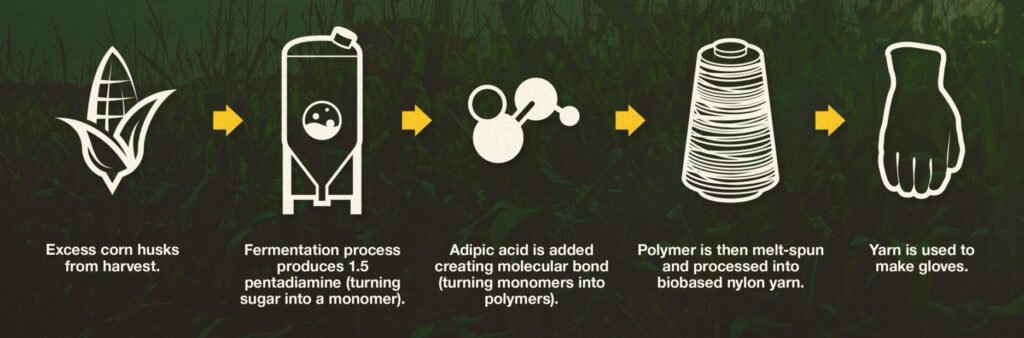
The process includes various steps from the conversion of the biomass (e.g., corn) into sugar or oil, their conversion into different types of intermediary chemicals, the polymerization, the extrusion of the polymers into fibers, and the production of yarns, fabrics, and final products.
ReStalk™ Process
Why Use Corn Husks and Stalks?
The main environmental benefit of using corn husk fibre is conservation of land and resources since you get fibre and food from the same plant. Corn husk is commonly available, with no geographical limitations, and is of limited commercial value. As corn is grown in large quantity all over the world, corn husk is readily available and is generally discarded as waste.
The Benefits of Biobased Products:
Biobased products provide all the benefits as conventional products: they are cost-comparative, readily available, and perform as well or better than their petroleum-containing counterparts. Biobased products also help us increase the use of renewable resources while decreasing use of non-renewable resources, such as petroleum. As found in the 2015 report, “An Economic Impact Analysis of the U.S. Biobased Products Industry,” Biobased products displace around 300 million gallons of petroleum per year in the U.S., the equivalent of taking 200,000 cars off the road.
The USDA BioPreffered® Program & Testing (ASTM D6866-18)
The U.S. Department of Agriculture (USDA) created the BioPreferred® Program as part of the 2002 Farm Bill to increase the purchase and use of biobased products. The program was reauthorized and expanded as part of the Agriculture Improvement Act of 2018 (2018 Farm Bill).
The Program’s purpose is to spur economic development, create new jobs and provide new markets for farm commodities. The increased development, purchase, and use of biobased products reduces our nation’s reliance on petroleum, increases the use of renewable agricultural resources, and contributes to reducing adverse environmental and health impacts.
ASTM D6866-18 is the standard test method to determine the biobased carbon/biogenic carbon content of solid, liquid, and/or gaseous samples using radiocarbon analysis.

Does your company or customer have sustainability goals? Let’s work together to meet them through our sustainable gloves!
Contact your Hand Protection Specialist today or email us at [email protected]!
FAQ
In regards to biobased yarns – It refers to materials that are made from renewable resources and consist at least partially of biological materials. Think of fibers, sugar(s), microorganisms, or proteins. Because biobased materials are renewable, they need to be able to grow back naturally and do so within a short-term period (generally 10 years).
Crops such as corn, sugar beet, sugarcane, and castor are the key feedstocks for biosynthetics at the moment.
Biobased feedstocks are often classified by generation. “First generation” usually includes common agricultural crops, often referred to as “food crops.” “Second generation” typically refers to non-food crops such as non-edible oil crops (e.g., castor), lignocellulosic crops (e.g., wood), and agricultural and industrial residues (e.g., sugarcane bagasse, wheat straw, orange peels, waste cooking oil). The corn husks and stalks we use in our gloves are from second generation – non food source.
The corn husks and stalks that are sourced for our gloves comes from agriculture waste from China.
Corn represents a significant grain crops that provides stable food to many populations. Large quantity of residues including straw or stover, stalk, cob, husk, etc. is released after corn harvest. Such residues are usually discarded by direct burning in the field, causing impacts on the environment and public health. Corn wastes have been applied as livestock feed, fertilizer, supplemental fiber source for paper pulp, building materials, and feedstocks for bioethanol and biogas.
No, performance and shelf life is not affected; there is no chance of them breaking down from day-to-day usage. So you can feel free to use them like you would with any other gloves that are not made from biobased nylon.


 Loading ...