

Introducing ZeroImpact™ Biobased Foam!
Watson Gloves is proud to bring to the world our collection of gloves featuring our brand new ZeroImpact™ biobased foam.
From Castor Plants to Gloves
At Watson Gloves, sustainability isn’t a trend—it’s a responsibility. That’s why we engineered ZeroImpact™, our latest advancement in sustainable hand protection, designed to deliver serious impact absorption while reducing reliance on petroleum‑based materials.
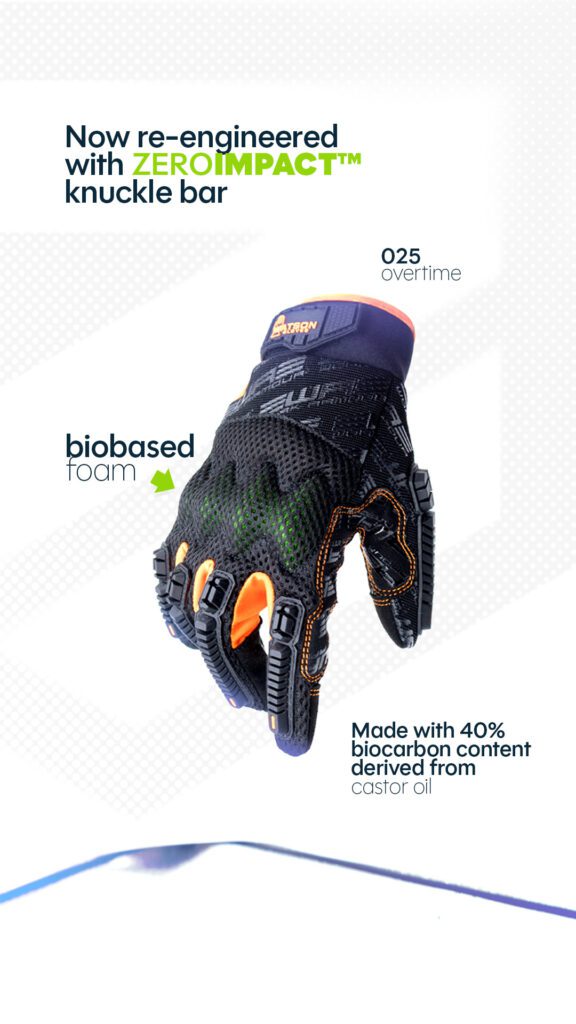
ZeroImpact™ is a USDA‑certified biobased foam, made with 40% biocarbon content derived from castor oil, providing the protection workers need while not stepping on the planet. No shortcuts. No compromises. Just smarter materials and proven performance.
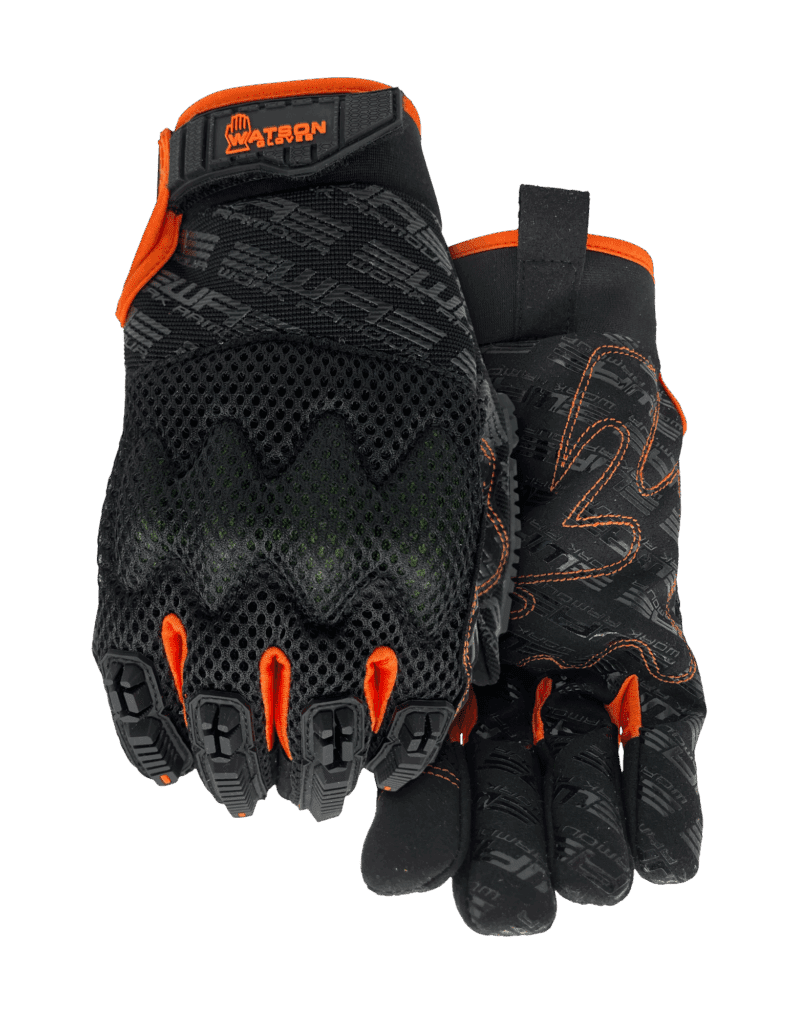
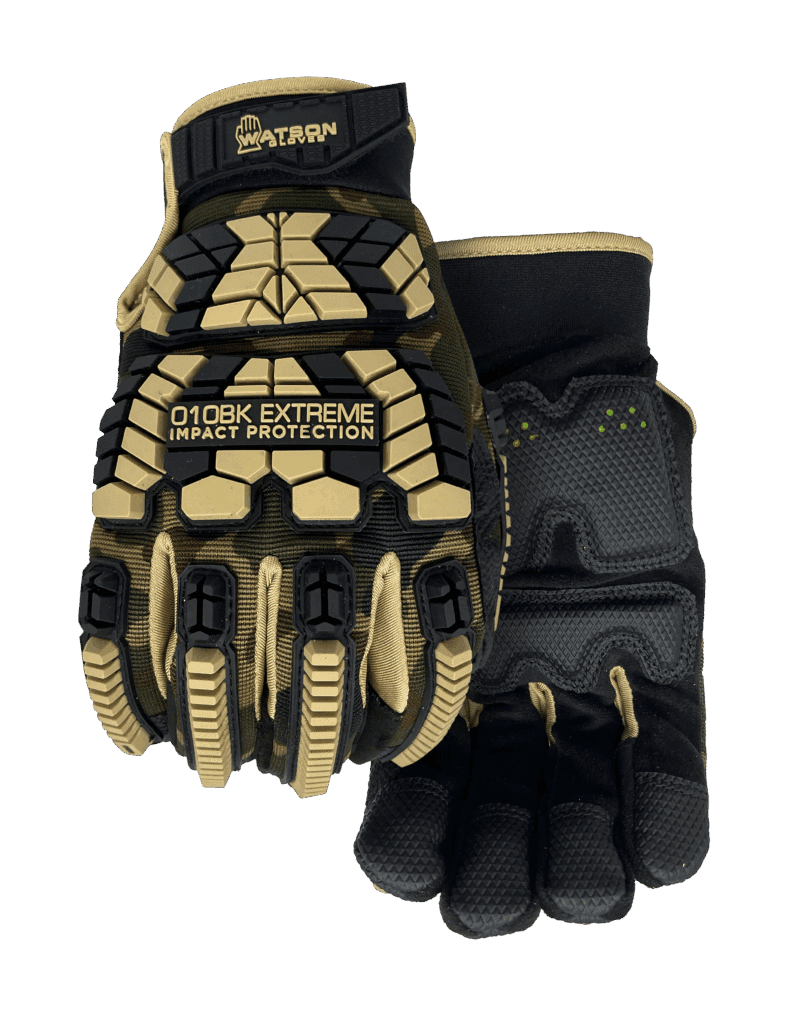
Now featured in the 025 Overtime, 010BK Extreme, and 010R Extreme, ZeroImpact™ protects high‑impact zones, helping reduce hand fatigue and meet demanding jobsite requirements without sacrificing durability, comfort, or protection. Same gloves you trust. A smarter way forward.

What Does Biobased Mean?
A biobased product is comprised partly of either biological materials, including renewable domestic agricultural materials such as corn or sugar cane, forestry, or marine materials such as plants. Biobased oils provide an alternative to commercial foam that is generally made of synthetic rubber, natural latex, or polyurethane.
How is Biobased (Polyurethane) Foam Made?
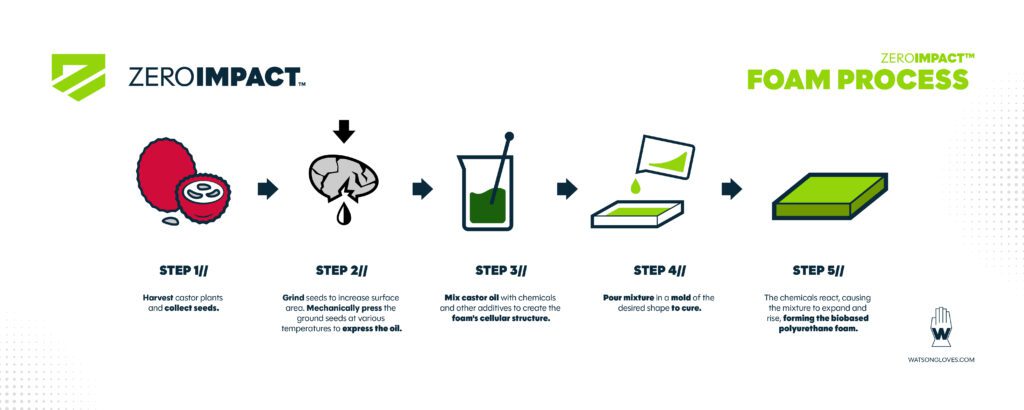
The process includes various steps from the conversion of the biomass (e.g., castor seeds) into oil by grinding and pressing them, mixing the oil with chemicals and other additives to create the foam’s cellular structure, pouring that mixture into a mold of the desired shape, and letting it cure to produce biobased polyurethane foam.
The ZeroImpact™ Process
Why Use Castor Plants and Seeds?
Castor seeds are used to make foam because they are a rapidly renewable, widely available, non‑food resource and delivers a significantly lower carbon footprint than petroleum‑based alternatives.
The Benefits of Biobased Products:
Biobased products provide all the benefits as conventional products: they are cost-comparative, readily available, and perform as well or better than their petroleum-containing counterparts. Biobased products also help us increase the use of renewable resources while decreasing use of non-renewable resources, such as petroleum. As found in the 2015 report, “An Economic Impact Analysis of the U.S. Biobased Products Industry,” Biobased products displace around 300 million gallons of petroleum per year in the U.S., the equivalent of taking 200,000 cars off the road.
The USDA BioPreffered® Program & Testing (ASTM D6866-18)
The U.S. Department of Agriculture (USDA) created the BioPreferred® Program as part of the 2002 Farm Bill to increase the purchase and use of biobased products. The program was reauthorized and expanded as part of the Agriculture Improvement Act of 2018 (2018 Farm Bill).
The Program’s purpose is to spur economic development, create new jobs and provide new markets for farm commodities. The increased development, purchase, and use of biobased products reduces our nation’s reliance on petroleum, increases the use of renewable agricultural resources, and contributes to reducing adverse environmental and health impacts.
ASTM D6866-18 is the standard test method to determine the biobased carbon/biogenic carbon content of solid, liquid, and/or gaseous samples using radiocarbon analysis.

Does your company or customer have sustainability goals? Let’s work together to meet them through our sustainable gloves!
Contact your Hand Protection Specialist today or email us at [email protected]!
FAQ
In regard to biobased foam – It refers to materials that are made from renewable resources and consist at least partially of biological materials. Think of fibers, sugar(s), microorganisms, oils, or proteins. Because biobased materials are renewable, they need to be able to grow back naturally and do so within a short-term period (generally 10 years).
Biobased feedstocks are often classified by generation. “First generation” usually includes common agricultural crops, often referred to as “food crops.” “Second generation” typically refers to non-food crops such as non-edible oil crops (e.g., castor), lignocellulosic crops (e.g., wood), and agricultural and industrial residues (e.g., sugarcane bagasse, wheat straw, orange peels, waste cooking oil). The castor plants and seeds we use are from second generation – a non food source.
They castor plant (Ricinus Communis) is a versatile, fast-growing tropical plant mainly used for its oil, which is processed for industrial lubricants, biofuels, cosmetics, and now biobased foam!
No, performance and shelf life is not affected; there is no chance of them breaking down from day-to-day usage. So you can feel free to use them like you would with any other gloves that are not made with biobased foam.




 Loading ...